Languages of Silence and Belonging

Updated: Mar 30
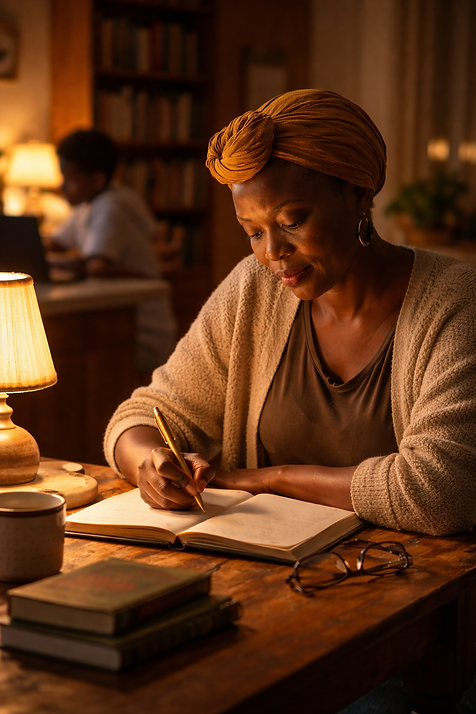
There is a Yoruba word my grandmother used that I have never been able to translate. She used it when something was both painful and necessary at the same time. When my uncle left for London in 1998. When my father came home from a long trip. When she held my face in her hands the morning I left for Canada and looked at me for a long time without speaking. She said the word quietly, almost to herself, and I stored it without understanding it and carried it with me across the Atlantic like something fragile wrapped in cloth.
I have looked for it in dictionaries. I have described it to Yoruba speakers here in Brampton who are older than me, who came before me, who might have the word somewhere in their storage. Nobody has been able to give it back to me whole.
This is what happens to language when it crosses borders. Some of it travels well. The prayers, the greetings, the words for food and family and the things that do not change. But some of it is tied to a place, to a specific quality of air or a particular kind of light, and when you remove it from that context it loses something that cannot be recovered.
My children speak Yoruba the way you speak a language you learned from a textbook. Correctly. Carefully. Without the muscle memory of someone who grew up inside it. When I speak to them in Yoruba they answer in English, not out of disrespect but because English is where they live, and I cannot be angry about that because I chose it for them, I brought them here, I made English their home on purpose.
What I did not anticipate was the silence that would open up between us. Not a hostile silence. A quiet one. The silence of a word I cannot translate and a feeling I cannot name in the language my children speak.
I have started writing things down. The word my grandmother used. The names of streets in Ibadan. The correct way to greet an elder. The order in which you serve food at a celebration and what it means if you get it wrong. Small things. Precise things. Things that will mean nothing to my children now and everything to them later when they are old enough to go looking.
I am writing them down because I know what it means to search for a word and not find it.I do not want them to feel that silence.
Tag: Language, Yoruba, Brampton, intergenerational


Comments